Summary
I defined the multimodal robot and companion app interfaces for Astro’s learned objects (and pet detection) for home monitoring. Working closely with applied scientists and researchers, I translated complex spatial mapping and path-planning algorithms into an intuitive, end-to-end UX, allowing customers to seamlessly monitor physical points of interest and maintaining customer’s trust with its planned path and navigating obstacles.
The Challenges
My core UX challenges centered around unpredictable spatial environments—specifically navigating temporary obstacles and defining how the robot evaluates and communicates the physical state of an object:
-
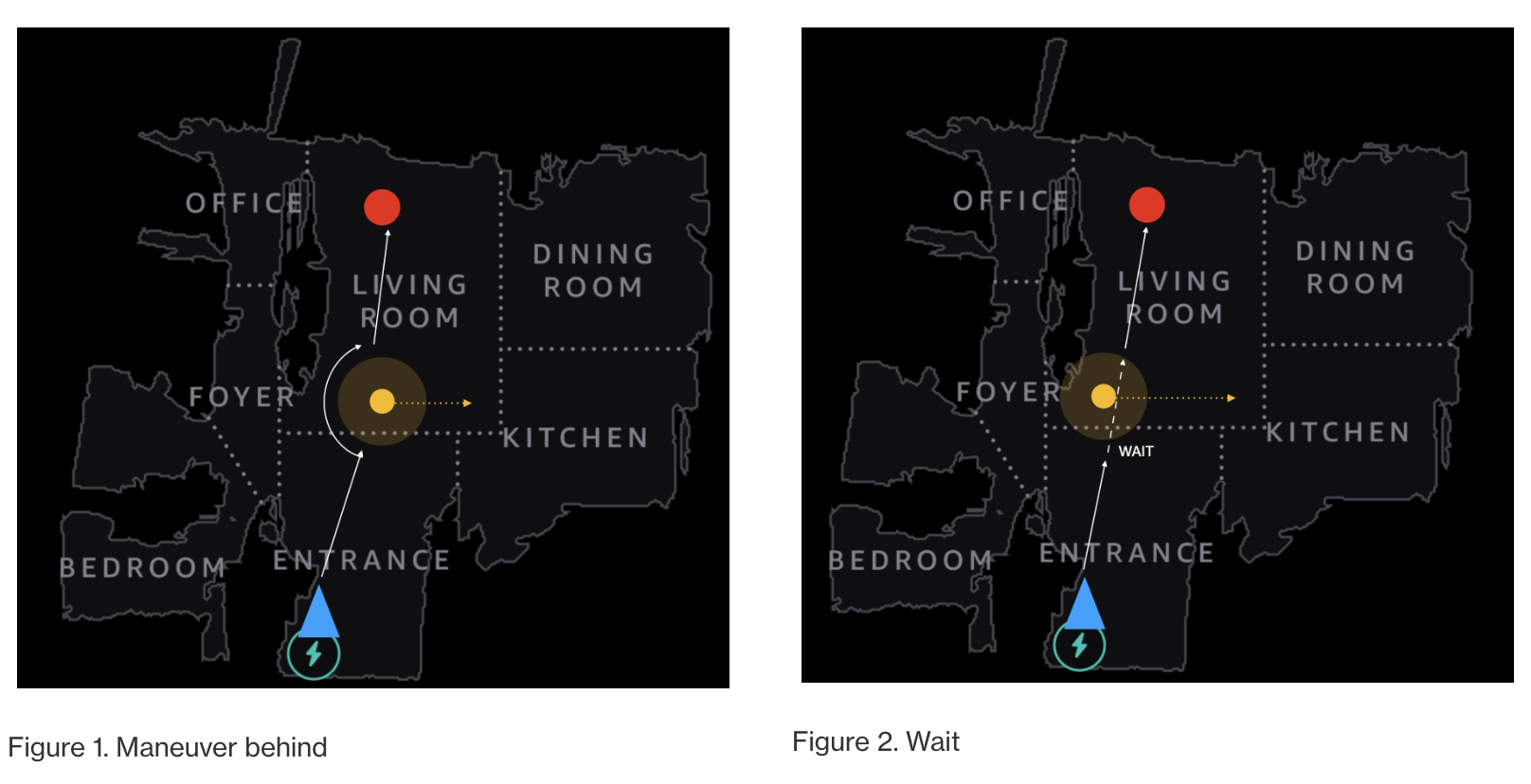
Dynamic Obstacles & Bystander Communication: During its initial home tour, Astro uses SLAM and depth sensors to learn a floorplan and register semi-permanent structures like furniture. However, daily life introduces dynamic, temporary obstacles. I established the UX guardrails for navigating these unpredictable environments, designing on-device interfaces that communicate the robot’s intent to physical bystanders in the room, and rigorously evaluating the refined navigation logic with the science team.
-
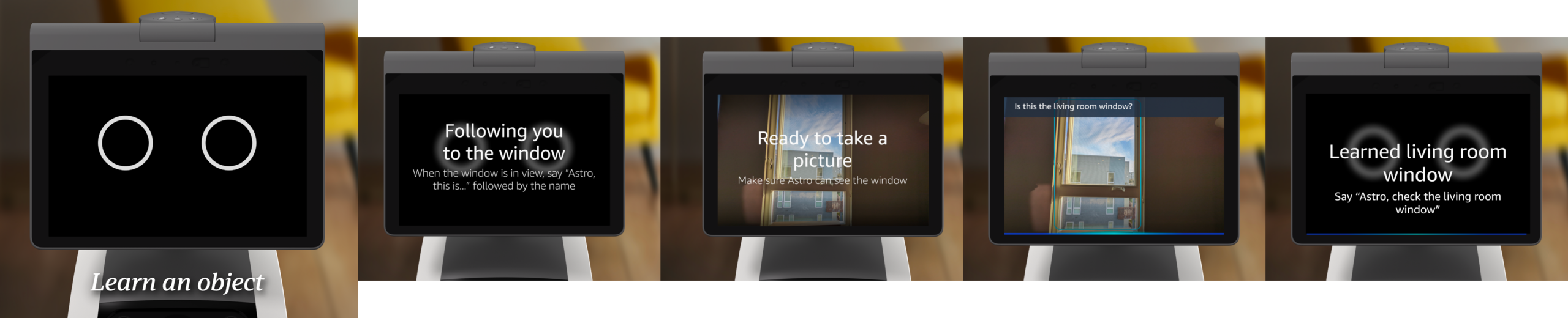
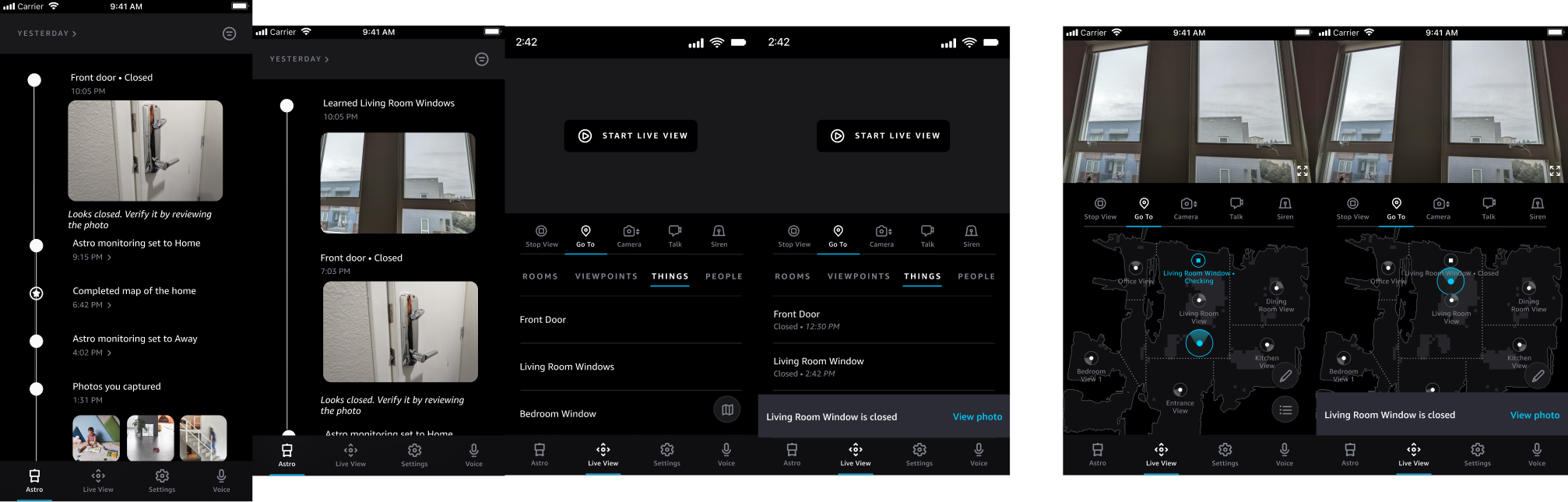
Sensor Confidence & Autonomous Repositioning: To verify if a door or window is locked, Astro must physically position itself at the precise angle and distance required for accurate sensor capture. I defined the communication thresholds for the companion app to ensure users understood the robot’s confidence levels without eroding trust. Furthermore, I architected the interaction logic that triggers Astro to autonomously reposition itself if it determines its current viewing state is inaccurate.
Years of Contribution 2022-2024
Coverage
How Amazon is enhancing Astro for the home and beyond
How Amazon Astro moves through its environment
Amazon’s $999 dog-like robot is getting smarter